Mini Split Installation in Wilkes-Barre, PA
A new system here will heat from October through May and cool from July through August every year. Tell us about the house, and a licensed contractor who covers Luzerne County will get in touch.
Tell us about the job
It takes about a minute.
Wilkes-Barre asks a mini-split to run most of the year
Winter nights here average 19°F from December through February, and homes need heat from October through May. That is eight months of heating, plus July and August when afternoons average 79°F and the same system switches to cooling. Ten months a year, a mini-split here is doing one job or the other.
A new unit has to hold its rated output at that 19°F average, not just on a mild afternoon. If it was manufactured from 2023 on, it has to meet 14.3 SEER2 for cooling and 7.5 HSPF2 for heating, the federal minimum for split-system heat pumps. Luzerne County has logged 13 winter storms and 151 damaging wind events over the past ten years, and 15% of Pennsylvania households went at least a day without power in 2024. Most mini-splits restart on their own once power is back, without anyone resetting them.
- 8 months
- October through May, your system heats
- 2 months
- July through August, it cools
- 19°F
- the average winter night it heats against
- 79°F
- the average summer afternoon it cools against
NOAA nClimDiv, 1991–2020 normals
Pennsylvania requires contractors to register with the state.
That registration puts the business on file with the state and nothing more. There is no trade exam behind it, and the state does not vouch for the install itself. Pennsylvania also keeps cities and towns from layering on their own HVAC license, so this registration is the only state-level record you get anywhere in the state.
For a mini-split job, the protection that matters comes from elsewhere. In most cities and counties, the install needs a permit from the local building office, with an inspection once the work is done, so someone checks the actual connections rather than just the paperwork on the business.
Source: Pennsylvania General Assembly
- Is a mini split worth it?
- For the right room, yes. A mini split heats and cools one space well without ductwork, which matters if that room runs on a window unit or gets nothing from the main system now. Wilkes-Barre winters drop to 19°F on average overnight from December through February, and a mini split rated for cold climates keeps working at those temperatures. Whether it makes sense for your house depends on which rooms need help and what you already have, so a contractor should look at the space before you decide.
- How many rooms can a mini split cover?
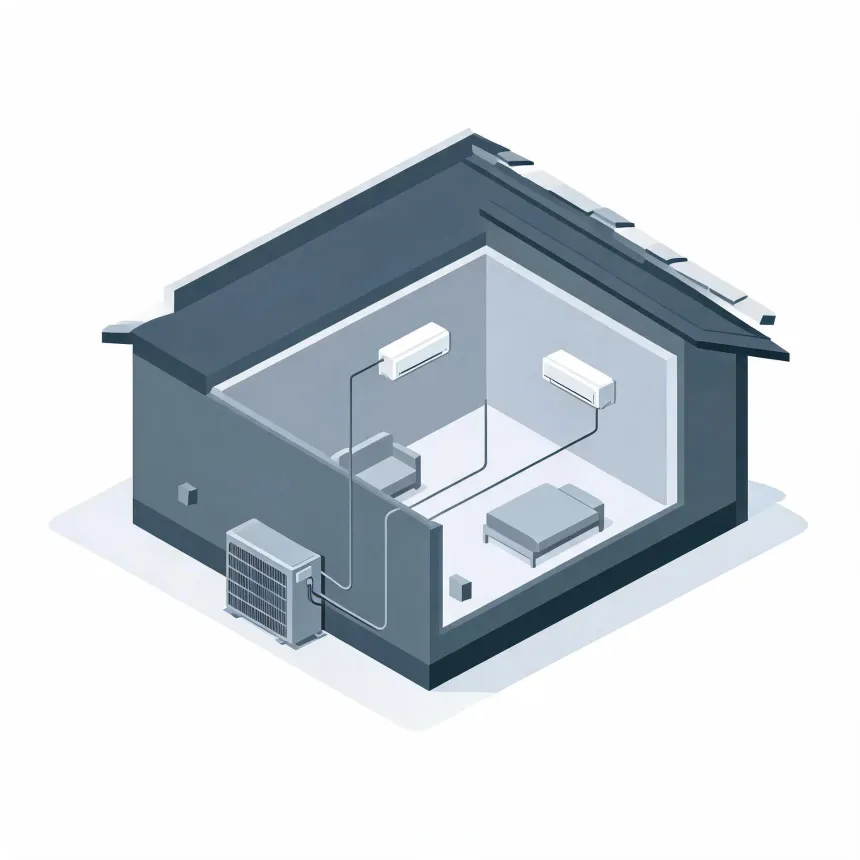
- A single outdoor unit can run one room or several, depending on how many indoor heads are connected to it. Multi-zone systems let each indoor unit run on its own, so one room can cool down while another stays untouched. More zones means more indoor units and more upfront equipment, so the right number comes down to which rooms actually need their own heating and cooling.
- Can a mini split heat a whole house?
- It can, if the system is sized and placed for that. A multi-zone mini split with an indoor head in each room can replace a furnace entirely, and cold-climate models are built to keep producing heat through winters here, where nights average 19°F from December through February. Whether that beats keeping your existing furnace depends on your home's layout, since every room needs a clear path for an indoor unit. A contractor can walk the house and say what coverage actually looks like room by room.