Mini Split Installation in Scranton, PA
A new system here will heat from September through May and cool from July through August every year. Tell us about the house, and a licensed contractor who covers Lackawanna County will get in touch.
Tell us about the job
It takes about a minute.

In Scranton, a mini-split works nine months of the year
Winter nights here average 19°F from December through February. Your mini-split has to keep pulling warmth out of that cold air from September through May, nine months straight. Summer only asks two months of it, with afternoons around 78°F. That long heating stretch is what a new system here has to be sized for.
Any mini-split installed new has to clear a federal floor. It must reach 14.3 SEER2 for cooling and 7.5 HSPF2 for heating. The cooling side of that floor is easy to meet here, since summer is short. The heating side is the one that matters, because it has to carry the house for nine months, on nights that drop to 19°F.
- 9 months
- September through May, your system heats
- 2 months
- July through August, it cools
- 19°F
- the average winter night it heats against
- 78°F
- the average summer afternoon it cools against
NOAA nClimDiv, 1991–2020 normals
Pennsylvania requires contractors to register with the state.
That registration puts the business on file with the Bureau of Consumer Protection. Nobody tested the contractor's work and no license backs it up, so the record tells you the business exists, not that it passed anything. Cities and towns in Pennsylvania cannot add their own HVAC license on top of that, so this registration is the only state-level record you get anywhere in the state, including here in Lackawanna County.
For a mini-split install, the protection that matters comes from the local building office instead of any state license. The job typically needs a permit before the work starts and an inspection once the unit is in, and that inspection is what checks the installation was done right.
Source: Pennsylvania General Assembly
- Is a mini split worth it?
- For most homes here, yes, especially if a room runs on window units or baseboard electric now. A mini split heats and cools the same space, and at 19°F on a January night it still has to be sized and chosen for real cold, not just the mild months. The main question is whether it fits how you use the space, one room, an addition, a whole house. A contractor can walk the house and tell you where it makes sense and where ductwork or another option might make more sense instead.
- How many rooms can a mini split cover?
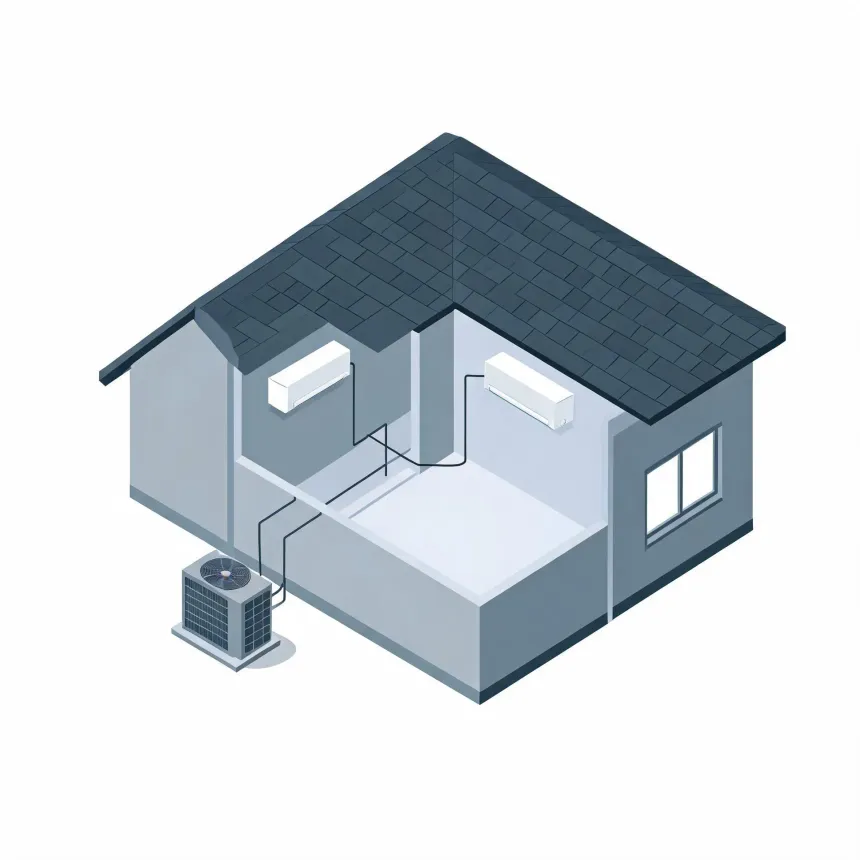
- A single outdoor unit can run one indoor head or several, depending on the system. Each indoor head is sized for the room it serves, so a two-bedroom addition might use one outdoor unit with two heads, while a whole floor could need more. The right number comes down to square footage, ceiling height, and how the rooms are laid out, which is why a contractor measures each room before quoting a system.
- Can a mini split heat a whole house?
- Yes, with enough indoor heads placed to cover every room, sized for a design temperature that reflects nights near 19°F here. Homes in this area need heat from September through May, nine months of the year, so the system has to be built for the coldest stretch, not an average day. A contractor will do a room by room load calculation to know how many heads the house needs and where each one goes.