Mini Split Installation in Lancaster, PA
A new system here will heat from October through April and cool from June through August every year. Tell us about the house, and a licensed contractor who covers Lancaster County will get in touch.
Tell us about the job
It takes about a minute.
What a mini-split in Lancaster County has to handle
Your mini-split will run most of the year here. Homes in Lancaster County need heat from October through April and cooling from June through August, ten months of work. On winter nights that average 24°F, the heat pump has to pull warmth out of air that cold, and on summer afternoons averaging 84°F it has to carry the cooling load on its own if it's replacing a window unit or filling a room central air doesn't reach.
A unit built for this has to be rated for both ends of that range. Any mini-split manufactured from 2023 on must meet 14.3 SEER2 for cooling and 7.5 HSPF2 for heating, the same federal floor as any other split-system heat pump. Storms are part of the picture too. Lancaster County has seen 16 winter storms and 215 damaging wind events over the past ten years, and 15% of Pennsylvania households lost power for at least a day in 2024. A mini-split installed and wired correctly will come back on by itself once power is restored.
- 7 months
- October through April, your system heats
- 3 months
- June through August, it cools
- 24°F
- the average winter night it heats against
- 84°F
- the average summer afternoon it cools against
NOAA nClimDiv, 1991–2020 normals
Pennsylvania requires contractors to register with the state.
That registration puts a business on file with the state and nothing more. There is no exam behind it and no license number that says the state tested this contractor's work. Pennsylvania also blocks cities and towns from layering on their own HVAC license, so that state record is the only one that exists anywhere in Lancaster County.
For a mini-split, the protection that matters comes from the local building office. Most cities and counties require a permit for this kind of installation, with an inspection once the work is done, and that inspection is what checks the job was done right. In Pennsylvania, that permit and inspection stand in for the license this state does not issue.
Source: Pennsylvania General Assembly
- Is a mini split worth it?
- For the right setup, yes. A mini split heats and cools without ducts, so it works well for additions, converted garages, or older homes that never had ductwork run to every room. Winters here run cold enough, down to 24°F on average, that a contractor needs to confirm the specific unit is rated to keep up on the coldest nights. If your home already has ducts and a working furnace, a mini split usually makes more sense as a way to handle one problem room than as a replacement for the whole system.
- How many rooms can a mini split cover?
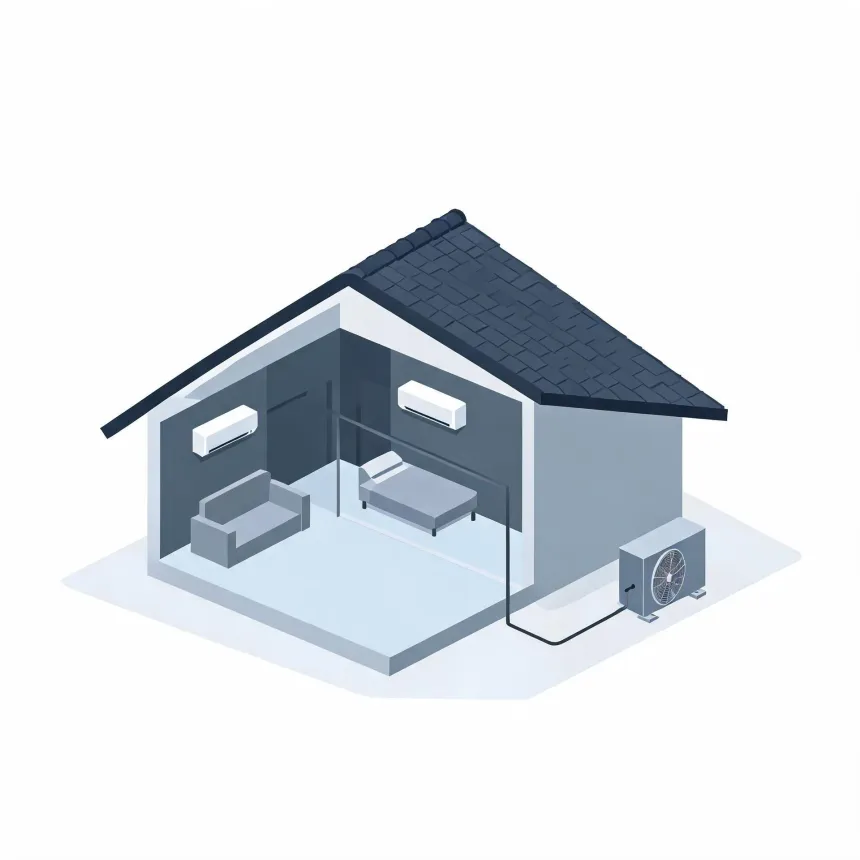
- It depends on how many indoor heads the outdoor unit is set up to run. Each indoor head handles one room or open area, so a multi-zone system is really several small systems sharing one outdoor compressor. The more zones you add, the more a contractor has to check that the outdoor unit still has enough capacity to run all of them at once, especially on a 24°F night in January.
- Can a mini split heat a whole house?
- It can, but only if it's sized and placed for that. A mini split with enough indoor heads, one per room or zone, can replace a central furnace, and homes here need heat from October through April, so the system has to be able to carry that full stretch, not just take the edge off. Whether that works for your house depends on the layout and how well the place holds heat, which is why a contractor needs to look at the home before sizing the system.