Mini Split Installation in York, PA
A new system here will heat from October through May and cool from June through August every year. Tell us about the house, and a licensed contractor who covers York County will get in touch.
Tell us about the job
It takes about a minute.
Eleven months of work for a York County mini-split
York County only gets a true break from heating or cooling in one month. Winter nights average 24°F from December through February, so a mini-split installed here needs to hold its heat output when the air outside is genuinely cold, not just cool. Summer afternoons average 83°F, which is steady work but nothing extreme, so the cooling side has an easier job than the heating side does.
A new mini-split installed today has to meet the federal minimum for split-system heat pumps. That is 14.3 SEER2 for cooling and 7.5 HSPF2 for heating. The heating number matters more here, since the unit will lean on its heat pump side for eight months, October through May, against three months of cooling.
- 8 months
- October through May, your system heats
- 3 months
- June through August, it cools
- 24°F
- the average winter night it heats against
- 83°F
- the average summer afternoon it cools against
NOAA nClimDiv, 1991–2020 normals
Pennsylvania requires contractors to register with the state.
That registration puts the business on file with the state and nothing more. Nobody tested this contractor's trade knowledge to get that record, and Pennsylvania cities and towns are not allowed to add their own HVAC license on top of it, so the registration is the only state-level record that exists anywhere in Pennsylvania.
For a mini-split, the protection that matters comes from somewhere else. In most cities and counties, installing a mini-split needs a permit from the local building office, and an inspection once the work is done. That inspection is the part of this job that Pennsylvania's registration was never built to cover.
Source: Pennsylvania General Assembly
- Is a mini split worth it?
- For most homes here, yes, especially as a way to add or replace heating and cooling in a room without ductwork. Your winters run cold, December through February averages 24°F at night, so you want a unit rated for real cold and not just mild climates. Mini splits also cool well through the summer stretch here, June through August. A contractor can look at the rooms you want covered and tell you whether a mini split makes more sense than extending ductwork or adding a window unit.
- How many rooms can a mini split cover?
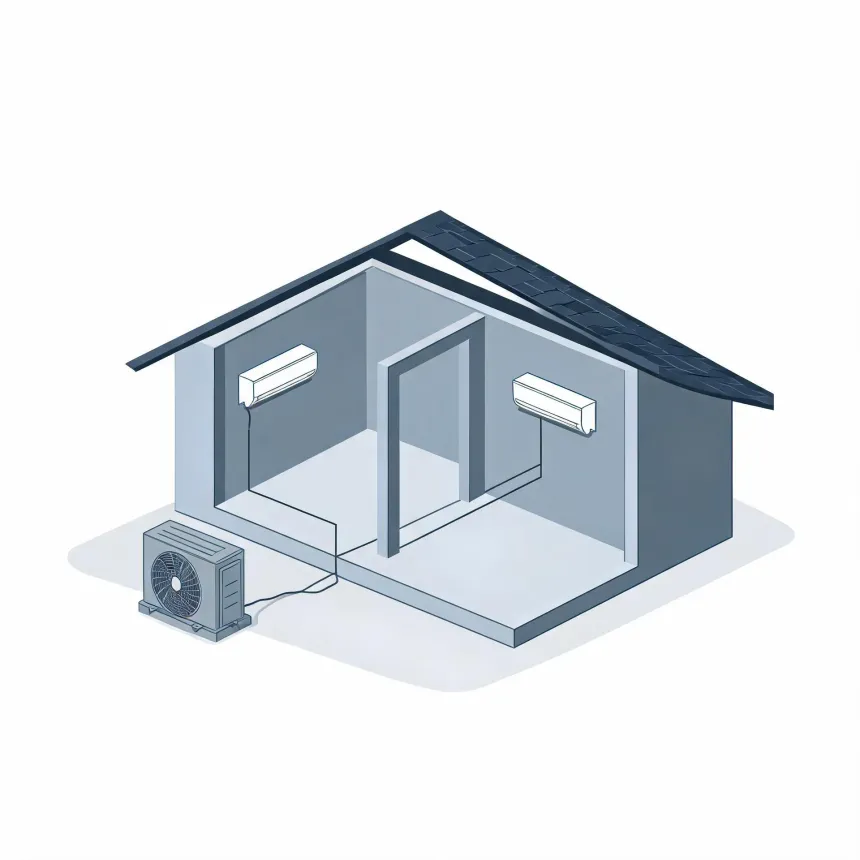
- One outdoor unit can run several indoor heads, each one covering its own room or open area on its own thermostat. A bedroom, a living room, and a converted garage could all run off the same outdoor unit at different temperatures. The limit is the outdoor unit's total capacity split across however many heads you connect. A contractor sizes the system to the rooms you want covered, not the other way around.
- Can a mini split heat a whole house?
- It can, but it takes the right number of indoor heads placed in the right rooms, sized for the whole house rather than one or two spaces. Homes here need heat from October through May, eight months a year, with winter nights averaging 24°F, so the system has to be rated to keep up on the coldest nights, not just take the edge off. A mini split only heats the room its head is in, so every room you want warm needs one or needs to share airflow with a room that has one. A contractor can walk the house and tell you how many heads it would take to cover it.