Mini Split Installation in Bristol, PA
A new system here will heat from October through May and cool from June through August every year. Tell us about the house, and a licensed contractor who covers Bucks County will get in touch.
Tell us about the job
It takes about a minute.
Bristol asks a mini-split to work almost year round
Eleven months of the year, a mini-split in Bristol is either heating or cooling your home. Winter nights average 24°F from December through February, and the unit has to hold its own on the coldest of those. Summer afternoons average 84°F, so the same system swings into cooling mode for June through August.
Any new mini-split installed today has to meet the federal minimum for split-system heat pumps, 14.3 SEER2 for cooling and 7.5 HSPF2 for heating. With a season this long, the difference between a unit that barely clears that mark and one built to hold up to it shows up fast, in how often it runs and how hard it works on the coldest nights.
- 8 months
- October through May, your system heats
- 3 months
- June through August, it cools
- 24°F
- the average winter night it heats against
- 84°F
- the average summer afternoon it cools against
NOAA nClimDiv, 1991–2020 normals
Pennsylvania requires contractors to register with the state.
Registration means the business is on file with the Bureau of Consumer Protection. Nobody tested the contractor's trade knowledge to get that number, and the state does not track how the work turns out. Pennsylvania doesn't let cities or towns layer their own HVAC license on top of that, so this registration is the only state-level record you'll find on a contractor anywhere in the state.
For a mini-split, the protection that matters more here is local. In most cities and counties, installing one needs a permit from the local building office, with an inspection once the work is done. That inspection is what checks the wiring and the line set were done right, not the registration.
Source: Pennsylvania General Assembly
- Is a mini split worth it?
- For most homes here, yes, especially since heat or cooling is needed 11 months a year. A mini split handles both jobs with one system, so it earns its keep in a place where winter lows average 24°F and summer afternoons hit 84°F. It works well as the main system for an add-on room or as backup heat alongside a furnace. A contractor can look at your house and tell you where it fits best.
- How many rooms can a mini split cover?
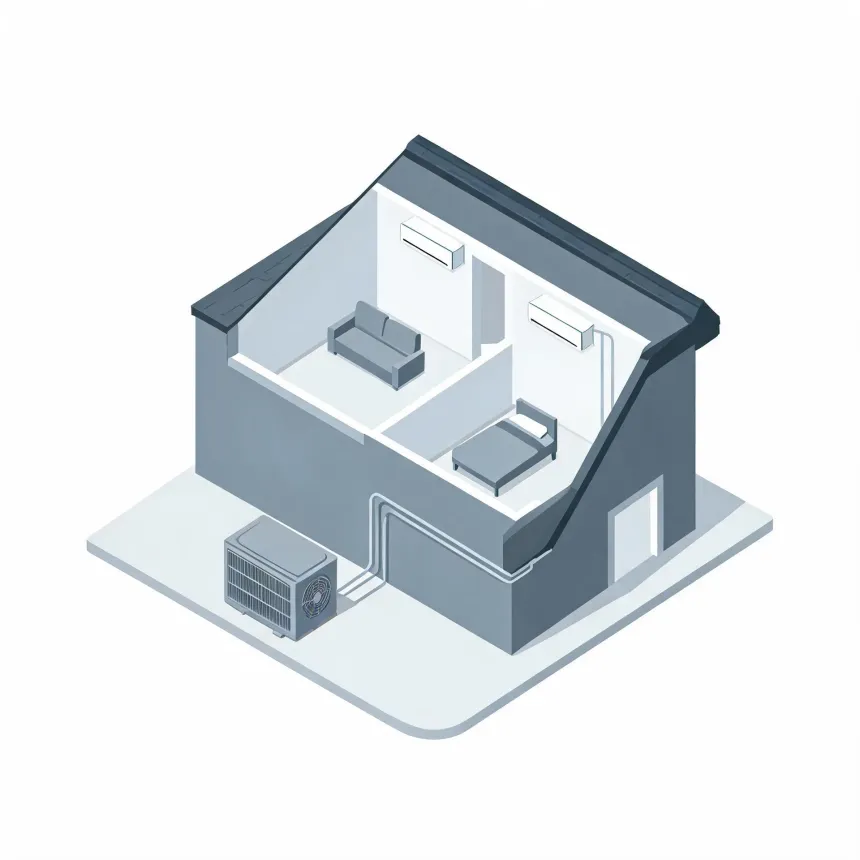
- A single outdoor unit can run anywhere from one indoor head up to about eight, depending on the model. Each indoor head heats and cools the room it's mounted in, so a multi-zone system covers as many rooms as it has heads. More heads on one outdoor unit means less capacity to spread around, so a contractor sizes the system to the rooms you actually want covered.
- Can a mini split heat a whole house?
- It can, if there's a head in every room that needs heat. Mini splits are heat pumps, so they pull heat from outside air even in cold weather, though how well they keep up on the coldest nights depends on the unit and how the house is laid out. With winter lows here averaging 24°F, a contractor should size the system for that, not just for a mild fall day.