
HVAC Installation in Bristol, PA
A new system here will heat from October through May and cool from June through August every year. Tell us about the house, and a licensed contractor who covers Bucks County will get in touch.
Tell us about the job
It takes about a minute.
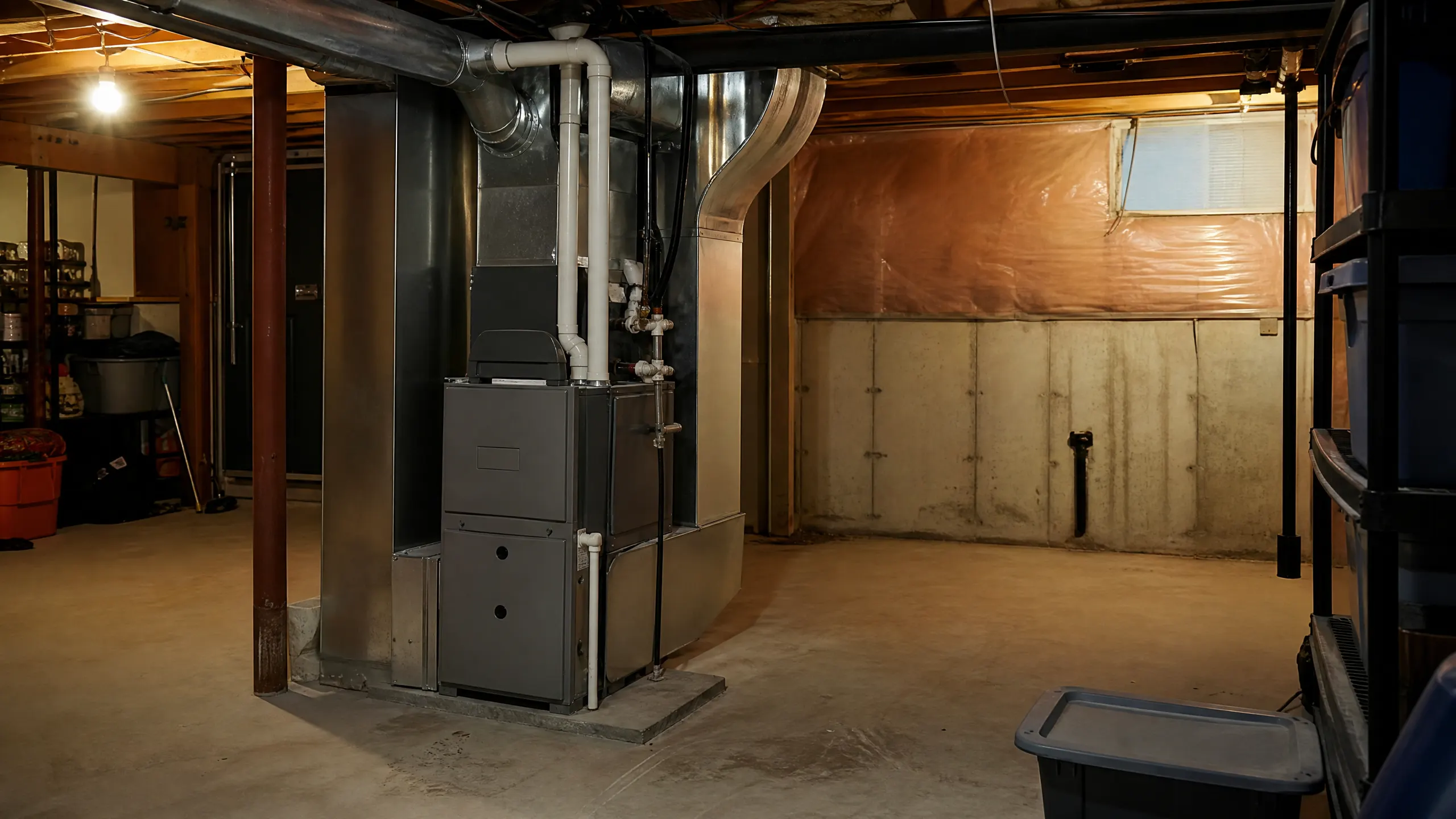
In Bristol, a new system works most of the year
Your furnace and your air conditioner cover eleven months between them here. Heat runs October through May, with winter nights averaging 24°F from December through February. Cooling picks up in June and holds through August, when afternoons average 84°F. Whatever you install has to handle both ends of that, not just one.
Bucks County also sees its share of rough weather. Ten years of records show 40 winter storms and 235 damaging wind events, and statewide, 15% of households lost power for at least 24 hours in 2024. A new installation is worth planning around that, from where the outdoor unit sits to how the system comes back on once the power does.
- 8 months
- October through May, your system heats
- 3 months
- June through August, it cools
- 24°F
- the average winter night it heats against
- 84°F
- the average summer afternoon it cools against
NOAA nClimDiv, 1991–2020 normals
Pennsylvania requires contractors to register with the state.
That registration puts the business on file with the state. Nobody tested the contractor's work to get that number, and Pennsylvania doesn't let Bucks County or any local government add its own HVAC license on top of it, so the registration is the only state record that exists here.
For a heating and cooling installation, the registration isn't what stands behind the work. In most cities and counties, this job needs a permit from the local building office, with an inspection once the work is done. That covers the installation itself, including the gas side of it, which is the part where a mistake matters most.
Source: Pennsylvania General Assembly
- When should I replace my HVAC system?
- Replace it when repairs keep coming or the system can't keep up anymore, not just because it's old. A furnace or air conditioner past 15 years is worth watching closely, since parts get harder to source and efficiency drops off. If a repair bill starts approaching what a new system would cost, that's usually the sign. Homes here run heat or cooling for 11 months of the year, so a system on its last legs doesn't get much rest to recover between seasons.
- Should I replace my furnace and air conditioner at the same time?
- If both are old, replacing them together often makes sense, but it depends on the condition of each unit. A furnace and air conditioner installed at different times can still work fine together as long as they're matched for airflow and capacity. Where it matters most is when one has already failed and the other is close behind. A contractor can look at the age and condition of both and tell you whether pairing the replacement makes sense for your house.
- What happens during an HVAC installation?
- A contractor removes the old equipment, sets the new furnace or air conditioner in place, and connects it to your ductwork, gas line or electrical circuit, and condensate drain as needed. They check the ducts for leaks or sizing problems, since a new unit connected to bad ductwork won't perform the way it should. Once it's running, they test it through a full cycle, check refrigerant charge or gas pressure, and confirm the thermostat is talking to the system correctly. Pennsylvania requires contractors to register with the state's Bureau of Consumer Protection, so it's worth confirming that before work starts.