Mini Split Installation in Philadelphia, PA
A new system here will heat from October through April and cool from June through September every year. Tell us about the house, and a licensed contractor who covers Philadelphia County will get in touch.
Tell us about the job
It takes about a minute.
Eleven months of work for a Philadelphia mini-split
Your mini-split is doing something almost all year here. Winters average 27°F and run cold from December through February, and homes need heat October through April, seven months straight. Summer swings back the other way, with afternoons averaging 85°F from June through September. That leaves one month, maybe two, when the system gets to rest.
A unit built for that kind of duty needs to hold up on both ends. Any mini-split heat pump made since January 1, 2023 has to meet 14.3 SEER2 for cooling and 7.5 HSPF2 for heating, the same minimums as any other split-system heat pump. In a climate that asks for cooling in summer and real heat all winter, those numbers matter on both sides, not just one.
- 7 months
- October through April, your system heats
- 4 months
- June through September, it cools
- 27°F
- the average winter night it heats against
- 85°F
- the average summer afternoon it cools against
NOAA nClimDiv, 1991–2020 normals
Pennsylvania requires contractors to register with the state.
Registration puts the business on file with the Bureau of Consumer Protection. Nobody tested this contractor on how to do the job, and there is no trade exam behind that filing. Philadelphia cannot require its own HVAC license on top of it, so this registration is the only state record that exists here.
For a mini-split installation, the check that matters happens through the local building office. In most cities and counties, this kind of installation needs a permit before the work starts and an inspection once it is done. That inspection is what confirms the line set, the electrical connection and the mounting were done right, not the state registration.
Source: Pennsylvania General Assembly
- Is a mini split worth it?
- For the right room, yes. A mini split heats and cools without ductwork, so it works well for an addition, a converted attic, or a garage turned living space where running ducts isn't practical. Philadelphia homes need heat seven months of the year and cooling four more, so a unit here earns its keep most of the year. Whether it's worth it for your house depends on what you're trying to heat or cool, and a contractor can look at the space and tell you if it fits.
- How many rooms can a mini split cover?
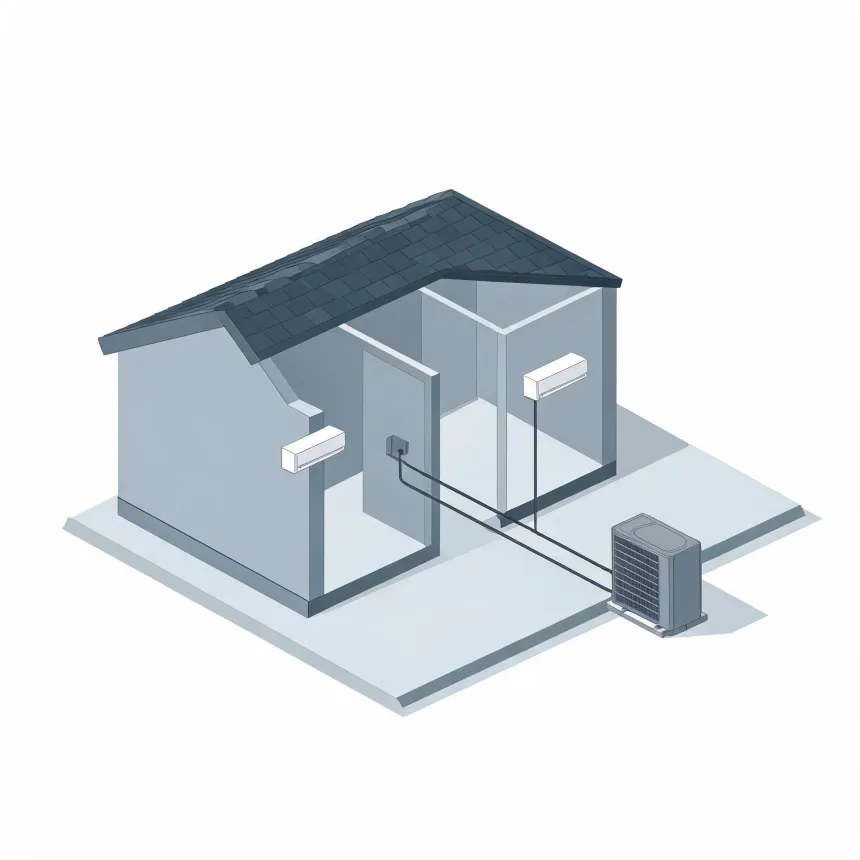
- A single indoor unit is sized for one room or one open area. If you need to cover several separate rooms, a multi-zone system connects multiple indoor units to one outdoor condenser, and each indoor unit still handles its own space. The number of zones a system can run depends on the outdoor unit's capacity, so a contractor will size it to the rooms you actually need covered.
- Can a mini split heat a whole house?
- It can, but only if it's sized and placed for that. A house-wide setup means a zone in enough rooms to cover the whole floor plan, not one indoor unit trying to reach rooms it isn't in. Philadelphia winters bring nights averaging 27°F from December through February, so the heat pump chosen for that job needs to be rated to perform in that kind of cold. A contractor can walk the house and work out how many zones it takes to actually heat all of it.