Mini Split Installation in Economy, PA
A new system here will heat from October through May and cool from June through August every year. Tell us about the house, and a licensed contractor who covers Beaver County will get in touch.
Tell us about the job
It takes about a minute.
What a mini-split has to handle here
Economy needs heat or cooling 11 months of the year. Winter nights average 23°F from December through February, and a mini-split's compressor has to keep working through all of that cold to keep the house warm. Summer afternoons average 82°F, so the same unit switches over and runs the other direction for June through August.
Any mini-split made from 2023 on has to meet 14.3 SEER2 for cooling and 7.5 HSPF2 for heating, so that baseline is covered no matter which one goes in. What matters more here is sizing it to hold up on the coldest nights, not just the mild months in between.
- 8 months
- October through May, your system heats
- 3 months
- June through August, it cools
- 23°F
- the average winter night it heats against
- 82°F
- the average summer afternoon it cools against
NOAA nClimDiv, 1991–2020 normals
Pennsylvania requires contractors to register with the state.
That registration puts the business on file with the state. It does not mean anyone tested the contractor's work, since Pennsylvania has no trade exam behind it. Cities and towns here cannot add their own HVAC license on top of it either, so the registration is the only state-level record that exists anywhere in Pennsylvania.
The part that actually checks the work is the permit. A mini-split installation in most cities and counties needs a permit from the local building office, and an inspection once the work is done. That inspection is what confirms the installation was done right, not the state registration.
Source: Pennsylvania General Assembly
- Is a mini split worth it?
- For most homes here, yes, especially if a room runs hot or cold without ductwork to fix it. A mini split heats and cools that space directly, without relying on ducts that may not reach it well. Winters here average 23°F and summers average 82°F, and a mini split installed for this area has to be rated to handle both. A contractor can look at your specific rooms and tell you where it makes sense.
- How many rooms can a mini split cover?
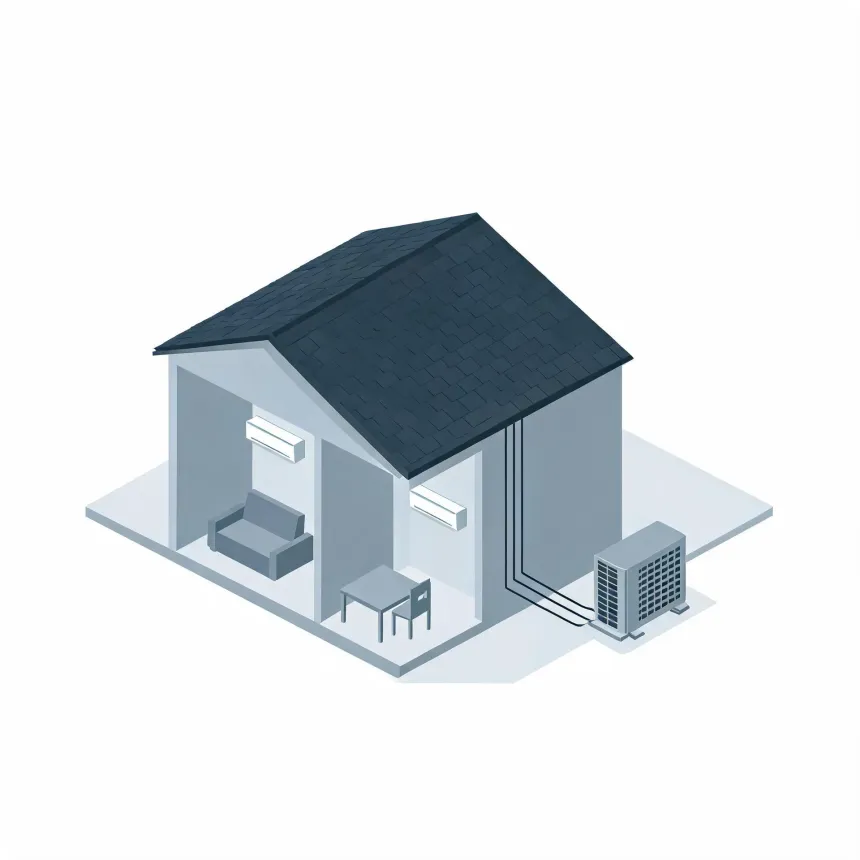
- A single outdoor unit can run more than one indoor head, so it can cover more than one room. Each indoor head handles one room or one open area, so the number of rooms you can cover comes down to how many heads the outdoor unit supports. A bigger outdoor unit can support more heads, but adding heads splits its total capacity across more space. A contractor sizing the system will look at your home's layout and tell you how many heads it needs.
- Can a mini split heat a whole house?
- It can, if enough indoor heads are placed to reach every room, but that takes planning around your home's actual layout. A mini split heat pump keeps producing heat in cold weather, though how much it delivers drops as the outdoor temperature drops. Winter nights here average 23°F, so a contractor needs to size the system for that cold, not just for a mild day. Homes here need heat from October through May, so whichever system is chosen has to hold up for eight months, not just take the edge off.