Mini Split Installation in Chambersburg, PA
A new system here will heat from October through May and cool from June through August every year. Tell us about the house, and a licensed contractor who covers Franklin County will get in touch.
Tell us about the job
It takes about a minute.
Eleven months of work, most of it on the heating side
Chambersburg needs heat or cooling 11 months of the year, and 8 of those months are heating. Winter nights average 24°F from December through February, so a mini-split installed here spends most of its life pulling heat out of cold air, not making cold air. Summer only asks for three months of work, with afternoons around 84°F.
A unit built for this has to be sized for that long heating stretch first. Any mini-split heat pump manufactured now has to meet 14.3 SEER2 for cooling and 7.5 HSPF2 for heating, but those are floors, not a guarantee it will keep up on the coldest nights. Franklin County has seen 16 winter storms over the past ten years, and 51.9% of homes here heat with electricity, so a system that falters when the grid is under strain leaves a house cold at the worst time.
- 8 months
- October through May, your system heats
- 3 months
- June through August, it cools
- 24°F
- the average winter night it heats against
- 84°F
- the average summer afternoon it cools against
NOAA nClimDiv, 1991–2020 normals
Pennsylvania requires contractors to register with the state.
The registration puts the business on file with the Bureau of Consumer Protection. There is no trade exam attached to it and no state board checking installation work, just a business on record. In Pennsylvania, no city or town can add its own HVAC license on top of this, so the registration is the only state-level record that exists anywhere in the state.
What covers the mini-split installation itself, in most cities and counties, is a permit from the local building office along with an inspection once the work is done. That inspection is what checks the installation was done right, not the registration.
Source: Pennsylvania General Assembly
- Is a mini split worth it?
- For most homes, yes, especially if you're heating or cooling a room that isn't on the ducted system, like a converted garage or a room addition. Chambersburg winters get down to 24°F on average, and a modern mini split heat pump is built to keep working in that range. Since 51.9% of homes here already heat with electricity, swapping baseboard or resistance heat for a mini split usually means the same fuel source but a more efficient way of using it. A contractor can look at the room and tell you whether it makes sense for your situation.
- How many rooms can a mini split cover?
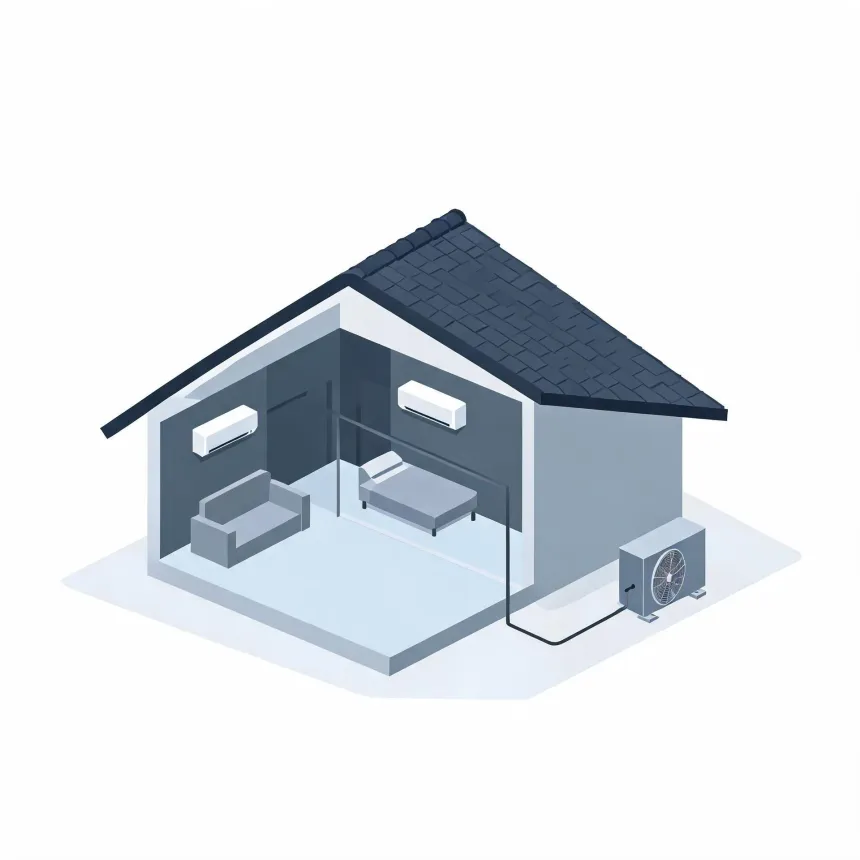
- A single outdoor unit can run one indoor head or several, depending on how it's set up. A single-zone system heats and cools one room or open area. A multi-zone system connects one outdoor condenser to multiple indoor heads, each with its own thermostat, so you can cover several rooms and control each one separately. How many rooms one outdoor unit can support depends on the size of the equipment and the rooms themselves, which is why a contractor needs to look at the layout before sizing it.
- Can a mini split heat a whole house?
- It can, with enough zones and the right sizing, but that's a bigger job than covering one or two rooms. Chambersburg needs heat from October through May, eight months a year, with winter nights averaging 24°F, so any system meant to carry the whole house through that stretch has to be sized for those lows, not just for a mild fall day. A multi-zone mini split with heads placed in each area of the house can do it. Whether it's the better route compared to a ducted system depends on the house itself, which a contractor would need to walk through to size correctly.